As-Sulami – Subtleties of the Ascension: Early Mystical Sayings on Muhammad’s Heavenly Journey
$20.67
$40.72
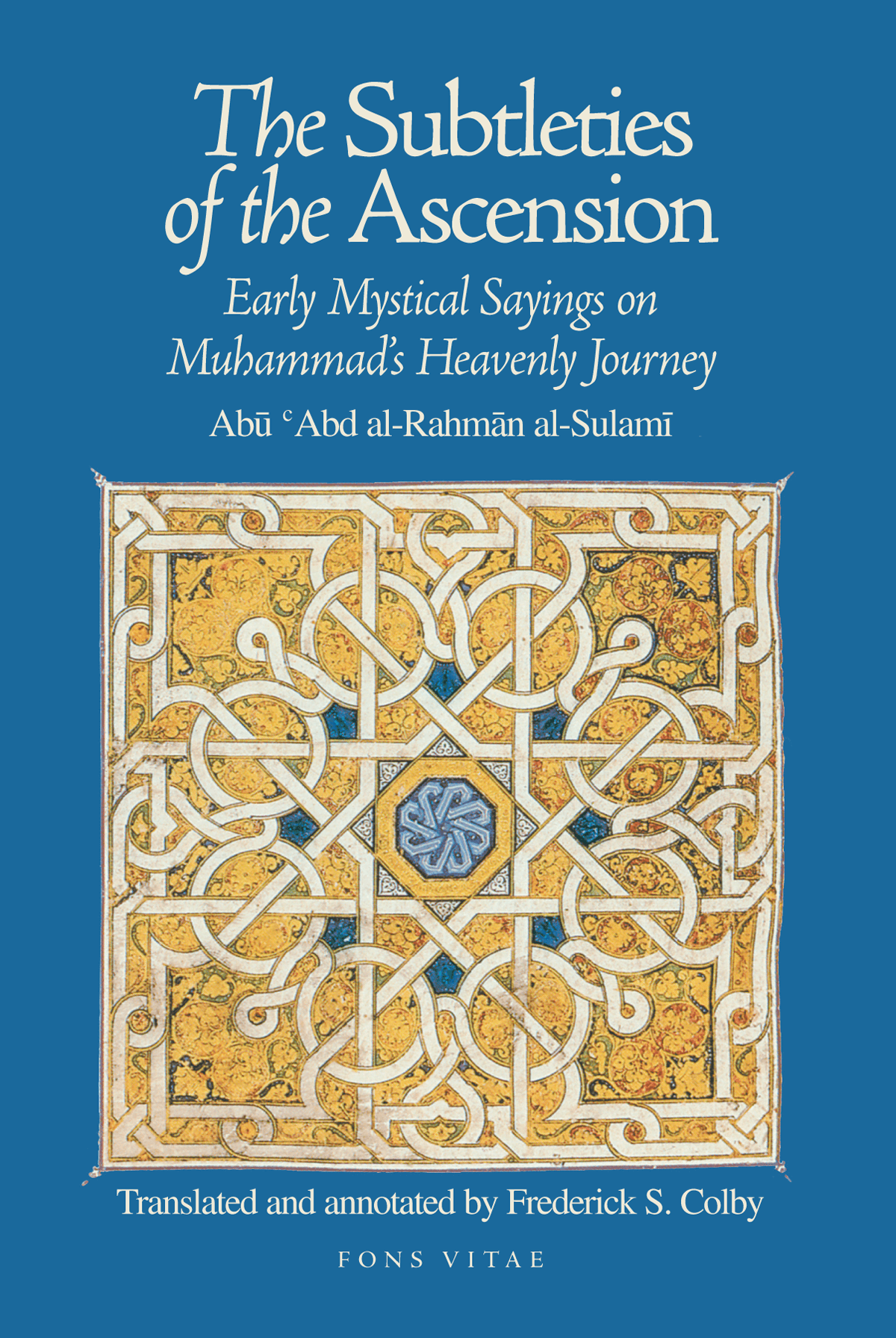
Product Description The story of Muhammad’s Night Journey and Ascension has enchanted Muslim audiences for centuries, and it became a central narrative in the life of the Prophet. It describes how angels came to Muhammad, brought him from Mecca to Jerusalem, and from there up through the heavens and back to Mecca, all in one special evening. While Muslim theologians debated about the exact nature of Muhammad’s travels, and Muslim philosophers interpreted the narrative as a Neoplatonic allegory, it was among the Sufi mystics that the journey made the most substantial impact. Some Sufis understood Muhammad’s Night Journey and Ascension as a metaphor for the mystical quest of returning to the divine presence. Other Sufis saw the journey as a blueprint for action, as an itinerary into the realms of the otherworld that they could follow through mystical experience. The great early Sufi compiler and writer, Abu ‘Abd al-Rahman Sulami (d. 1021) lived during the time when the Sufi movement was just beginning to become standardized and systematized, and he forms a pivotal and transitional figure who records the wisdom of the early Sufi masters for later generations of Muslim mystics. In the work translated herein, Sulami collects reports of what these foundational sages said about Muhammad’s night journey and ascension, illustrating how they interpreted its significance in revealing the subtle realities of existence. The sayings take up the narrative threads from the Qur’an, the sayings of the Prophet known as hadith, and other versions of the night journey and ascension story and weave them into rich tapestries of discourse. They are sometimes obscure and sometimes transparent, but almost always lyrical and profound. This book includes not only a translation of the sayings that Sulami compiles in the early manuscript of his work, The Subtleties of the Ascension, a work never before published in any language, but it also provides extensive annotation and commentary in order to make these sayings more accessible to the general reader. It also provides an edition of the Arabic text and an appendix that would be valuable to the specialist. Finally, stunning illustrations of the night journey and ascension, drawn from a masterpiece of Persian miniature painting, accompany the text and add another dimension to its rich texture. The work thus will appeal to both generalists and specialists interested in mysticism, in Sufism, in otherworldly journeys, in medieval folklore, and in Islamic studies. Reviews "It has been long recognized that the Heavenly Ascension and Night Journey (Isra wa Mi'raj) of the Prophet represent the paradigmatic spiritual experience for Muslim mystics. And yet there have been few monographs that study this important topic in depth. That lacunae has now been admirably filled by Frederick Colby's wondrous work, The Subtleties of the Ascension. This book features lucid translations and subtle analysis, and is recommended with heart and soul to students of Islamic studies, Sufism, and all who aspire to the Divine Presence in the fashion of the blessed Prophet of Islam." -Professor Omid Safi, Colgate University "The Subtleties of the Ascension is an important document of early Islamic spirituality, revealing the rich tradition of mystical interpretation of the Ascension of the Prophet Muhammad. This translation will be an important resource for Islamic studies, comparative religion, and mysticism." -Professor Carl Ernst, University of North Carolina, Chapel Hill "This priceless text is the earliest and most authentic source we have of the genre of mi'raj literature today. Al-Sulami, both a hadith scholar and a mentor of the Sufi Path, assures the authenticity of these traditions before they were lost in the popular apocryphal narratives such as the mi'raj text ascribed to Ibn Abbas. We owe a debt of gratitude to F. Colby for his well-documented and annotated edition of this authentic text of formative Islamic spirituality. The Arabic/English presentation of the text makes this work as valuable to the student of Arabic as it does to the student of early Islam." -Kenneth Honerkamp, University of Georgia at Athens