$10.8
$14.58
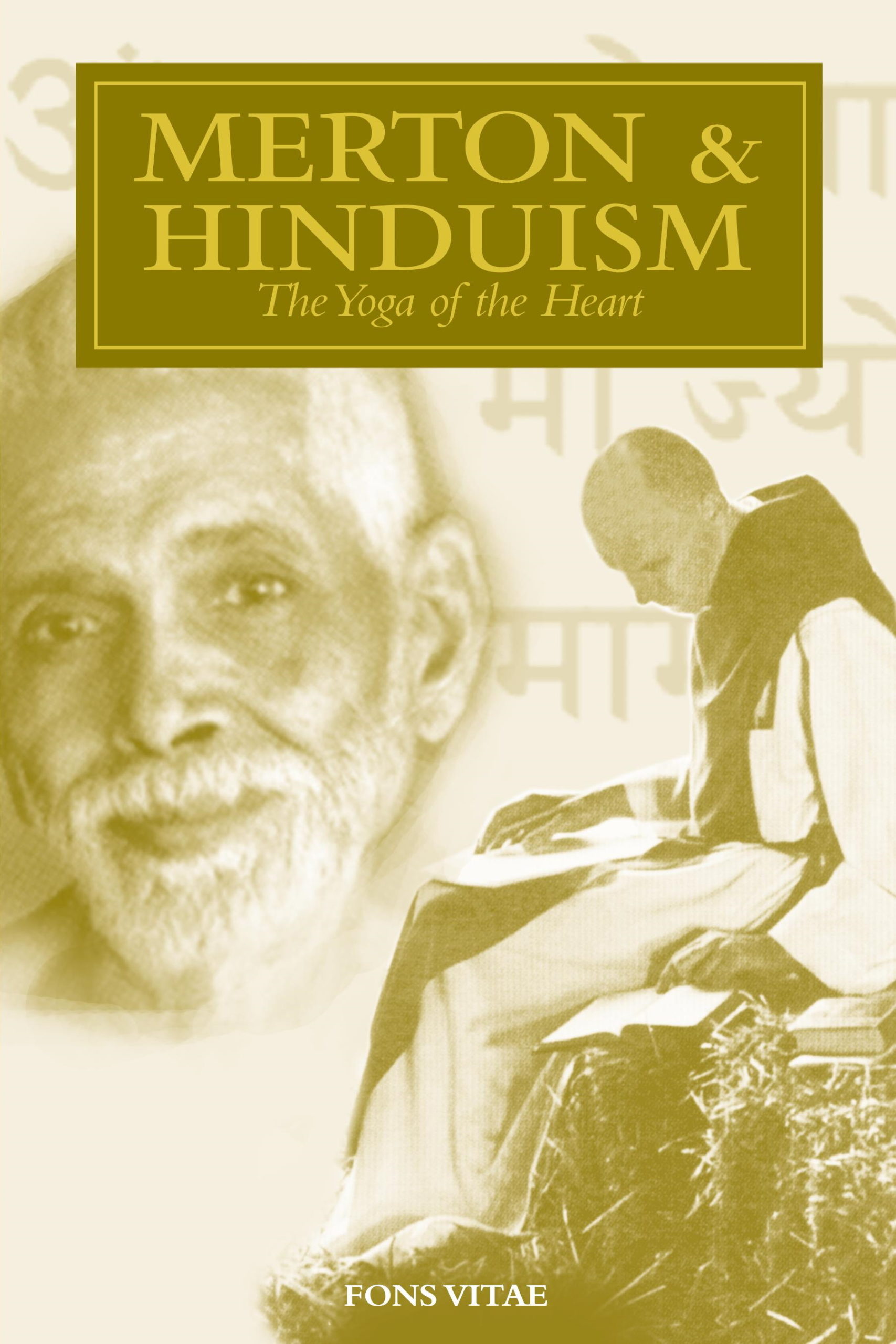
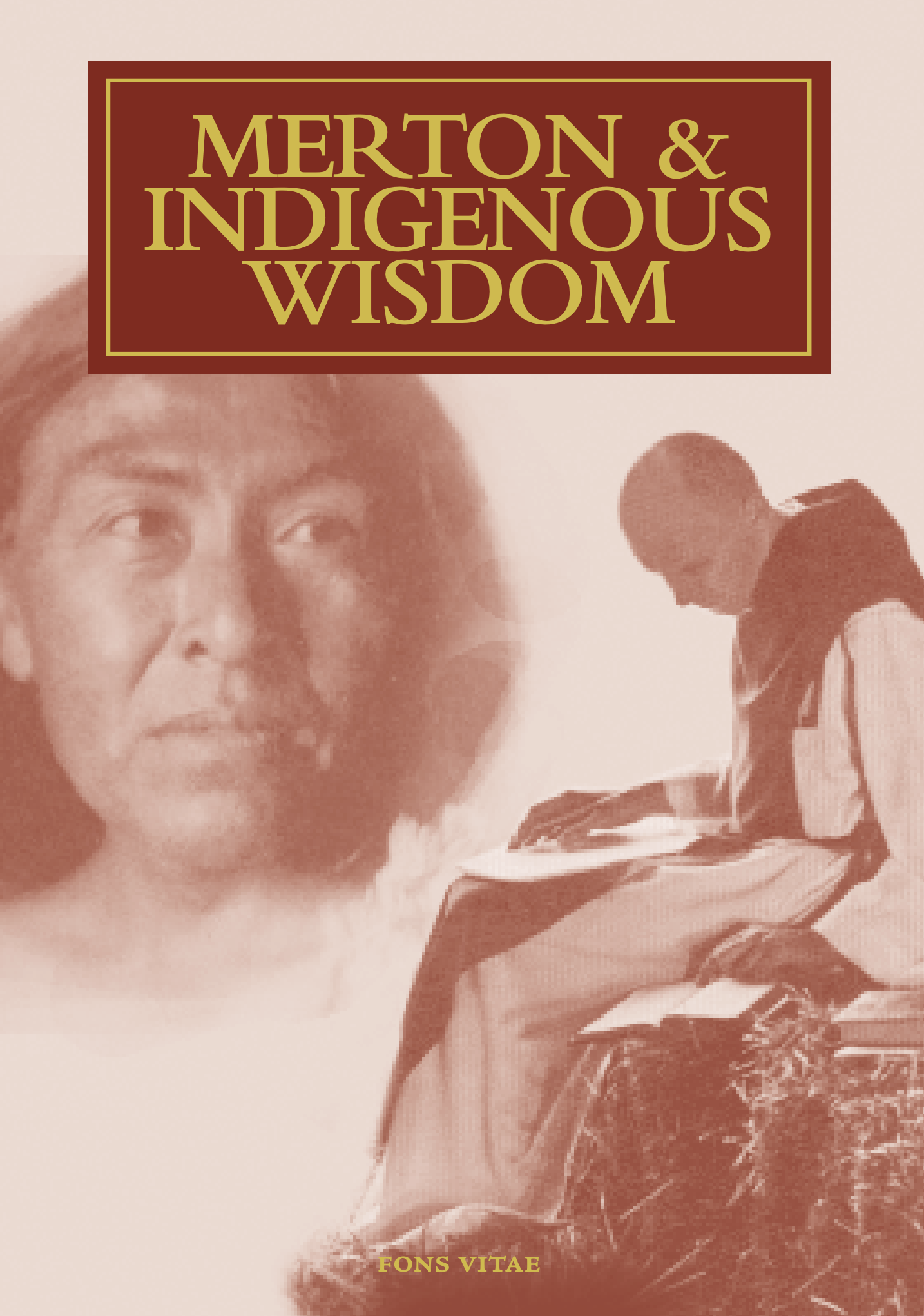
Product Description “If, in the West, God can no longer be experienced as other than ‘dead,’ it is because of an inner split and self-alienation which have characterized the Western mind in its single-minded dedication to only half of life: that which is exterior, objective, and quantitative. The ‘death of God’ and the consequent death of genuine moral sense, respect for life, for humanity, for value, has expressed the death of an inner subjective quality of life: a quality which in the traditional religions was experienced in terms of God-consciousness. Not concentration on an idea or concept of God, still less on an image of God, but a sense of presence, of an ultimate ground of reality and meaning, from which life and love could spontaneously flower.” – Thomas Merton, “The Significance of the Bhagavad-Gita” “…karma means ‘action.’ It’s another title for the idea of cause and effect. The idea here is just simply that…your work is your yoga, and if you use it in the right way it can be a yoga of complete unification, and can lead you to this sense of inmost identity – of being one with God…. Your work – the work of a householder, the work of a married [person]… the work of the kitchen; or your trade…the things you have to do to live – is your yoga. But it all depends how you do it. And the thing to do is to learn how to do your work in such a way that it is a karma yoga. And it can lead you to complete enlightenment. Nothing else is necessary…” “…The great thing is that your work is not overwhelmingly serious. It’s never to be taken with the kind of seriousness that we take it with, because really not that much depends on the results. The great thing in karma yoga is first of all that you work without desire, and you work without attaching importance to the results. The whole thing is that the work is part of a game which you do as well as you can, but without any desire to succeed and without any care about whether you get results, whether you get rewards or not, because you leave that in God’s hands. It’s the equivalent of our doing it for the love of God, really, purely doing it purely for God’s love.” – Thomas Merton, “Yoga: The Prophetic Vision” (Monastic Conference) In spite it being over 100 years since his birth, interest in Thomas Merton continues to exponentially grow with conferences, retreat, seminars, classes, and books continuing to emerge year after year. This book offers a significant addition to this material in that it is the first to trace Merton’s interest and dialogue with yoga – a major recent trend in American spirituality – and Hinduism – a topic previously thought to be of little interest to Merton. TABLE OF CONTENTS The Fons Vitae Thomas Merton Series Thomas Merton’s Prayer Introduction: “Necessary for Enlightenment”: Thomas Merton’s Lifelong Engagement with Yoga- David M. Odorisio Part I – Hinduism and Christianity in Context: Historical and Comparative Perspectives Hinduism: Origins and Historical Development Vasudha Narayanan Yoga, The One and The Many David Gordon White Indian Christian Tradition M. Thomas Thangaraj Introduction to “Yoga and Hesychasm” by Jules Monchanin David M. Odorisio Yoga and Hesychasm Jules Monchanin Hesychasm and Raja-Yoga Thomas Matus Part II – Merton and Hinduism: Dialogue and Deep Learning in the Cave of the Heart Why Zen Buddhism and not Hinduism? The Asias of Thomas Merton’s Voyages East Rachel Fell McDermott Mahanambrata Brahmachari and Thomas Merton Richard V. Croghan The Search for Brahmachari William Buchanan In Memoriam: Mahanambrata Brahmachari (25 December 1904 – 18 October 1999) Francis X. Clooney, SJ Fight or Flight: Thomas Merton and the Bhagavad Gita Steven J. Rosen (Satyaraja Dasa) Thomas Merton and the Bhagavad Gita Christopher Key Chapple Merton on Gandhi Paul R. Dekar Thomas Merton’s Deep Christian Learning across Religious Borders Francis X. Clooney, SJ Theoria Physike and the Brahma-sutra: The Rediscovery of the Cosmotheandric Dimension in the Work of Thomas Merton and Raimon Panikkar Thomas Cattoi “Transubstantiation is the Rule”: Merton and Coomaraswamy Roger Lipsey The Expansive Hindu: Thomas Merton and Amiya Chakravarty William Apel Overlooking America: ‘Day Six O’Hare Telephane’ and the Landscape of Lograire Patrick O’Connell Thomas Merton and Paramahansa Yogananda: Two Prayerful Mergings of Cult and Culture Emile J. Farge Part III – Merton on Hinduism: The Yoga of the Heart Dr M. B. Bramachari, A Personal Tribute Thomas Merton Preface to Dom Denys Rutledge’s In Search of a Yogi Thomas Merton Thomas Merton’s Letter to Philip L. Griggs (Yogeshananda) Thomas Merton Review of Jules Monchanin, Écrits Spirituels Thomas Merton A Tribute to Gandhi Thomas Merton Gandhi and the One-Eyed Giant Thomas Merton The Significance of the Bhagavad-Gita Thomas Merton Thomas Merton’s Notes on Patanjali’s Yoga Sutra Thomas Merton Yoga in Merton’s Novitiate Br. Paul Quenon, OCSO Exercises to Help Bring the Body Under Control of the Spirit Thomas Merton Thomas Merton’s Monastic Conferences on Hinduism and Yoga: 1963-1968 Transcribed by David M. Odorisio Selected Readings on Vedanta from the Journals of Thomas Merton Thomas Merton Part IV – Appendix Reading Thomas Merton Reading Hinduism and Yoga: A Bibliography of Sources Permissions Thomas Merton’s Photographs All photographs were taken by Merton during his 1968 journey to India unless otherwise noted. Reclining Bull between Draupadi Ratha and Arjuna Ratha (Mahabalipuram, India) Cave Temple (Mahabalipuram, India) The Great Relief (detail), Arjuna’s Penance (Mahabalipuram, India) Shore Temple (Mahabalipuram, India) Jantar Mantar Observatory (Jaipur, India) Jantar Mantar Observatory (Jaipur, India) Thomas Merton with Amiya Chakravarty and friends (photographer unknown; Kolkata [Calcutta], India) Ananda K. and Doña Luisa Coomaraswamy Review of Merton & Hinduism: The Yoga of the Heart Edited by David M. Odorisio Louisville, KY: Fons Vitae, 2021 400 pages / $29.95 paper Reviewed by David Belcastro David Belcastro maintains a yoga practice and taught yoga philosophy and practice for twenty years. He is Professor Emeritus at Capital University in Bexley, Ohio. In the past, he served ITMS as President and co-editor of The Merton Annual. In 1962 Merton was asked to write a preface to In Search of a Yogi by Dom Denys Ruthledge. The book narrates Ruthledge’s pilgrimage in India and inquiry into the lives of yogis. Merton was concerned about the way the censors may respond given their skepticism of Eastern religions. Even so, he decided to write the preface and notes the reason for doing so: “Yogis and Christian contemplatives both exist, and there is every reason why they should compare notes.” Six years later Merton made his own journey to the East. While his pilgrimage to the Buddhist site at Polonnaruwa and his interest in Buddhism and Zen have been well documented and studied, his visit to Mahabalipuram and his interest in Hinduism and Yoga have not received the same attention until now. Merton & Hinduism: The Yoga of the Heart, last in The Fons Vitae Thomas Merton Series, documents Merton’s work in this area, encourages collaboration among scholars, and raises the question of how his understanding of Hinduism and his practice of Yoga might shed new light on other areas of his life and work. Editor David Odorisio introduces this publication with an overview of Merton’s interest in India’s ancient religious traditions and practices. Observing the trajectories of Merton’s interest, Odorisio identifies four phases. The first phase focuses on Merton’s undergraduate years at Columbia. It was here that he discovered the Bhagavad Gita while writing his master’s thesis on William Blake and here that he developed a friendship with Brahmarchari, fellow student and Hindu monk. While the first phase finds expression in Ascent to Truth, The Inner Experience represents the second phase. Here we see the influence of the Bhagavad Gita and Patanjali’s Yoga Sutras on Merton’s monastic formation and understanding of contemplation. The third phase occurs during the early to mid years of the 1960’s. Merton’s writings on Mohandas Gandhi appear and he is practicing and teaching Yoga at the monastery. The year 1968 marks the final phase. During this time, Merton returns to traditional sources. It is important to note that the list of those sources indicate that his study of Hinduism and Yoga was increasing in both breadth and depth as he prepared for his pilgrimage to India. Odoriso organizes the volume in four parts. The first part introduces the reader to Hinduism and compares the spiritualities of Yoga and Hesychasm thereby establishing a connection between two contemplative traditions that were at play in Merton’s life. The second part offers essays that explore and reflect on the various aspects of Merton’s interest in Hinduism and Yoga. The seventeen contributors represented in the first two parts consist of scholars, professors, monks, and priests with various expertise in Merton studies, Christian theology, Indian religions, literature and art, Yoga philosophy and practice, comparative religions, and religion and psychology. Together they initiate this new field of Merton studies. Parts three and four provide resources for the reader’s research. The fourth part, a short appendix, is a bibliography of many of the books Merton read and that informed his thinking, writing, and practice. The third part includes published and unpublished writings, ten of which are by Merton: notes from his reading of Patanjali’s Yoga Sutras and Hindu Philosophy; essays on the Bhagavad-Gita, Gandhi and Bramachari; a preface to Dom Denys Rutledge’s book regarding his pilgrimage to India and a review of a book about Abbe Monchanin who went to India to establish an ashram. Then there are transcriptions of conferences at the Abbey on Hinduism and Yoga; Merton’s notes for teaching yoga to novices; and Br. Paul Quenon’s account of yoga with Merton in the novitiate. Merton & Hinduism: The Yoga of the Heart contributes to the series of which it is a part by providing additional insight into Merton as a 20th century bridge builder. The differences between Christianity and Hinduism may represent one of the deepest and widest of religious and cultural divides to bridge. Merton’s interfaith imagination, however, was sufficiently expansive and creative for the task. He was able to see that India had much to offer the West with regard to meditative practices, the integration of the body with spiritual formation, and the grounding of social action in the contemplative life. We also see in these essays and documents something of how Merton went about building the bridge. As a practitioner of yoga, he immerses himself in the tradition and thereby sees it from the inside rather than from the outside and at a distance. There was an open attitude that allowed him to critically and respectfully examine ideas and practices. With regard to that openness, Amiya Chakravarty writes: Readers of Thomas Merton know that his openness to man’s spiritual horizon came from a rootedness of faith; and inner security that led him to explore, experience, and interpret the affinities and differences between religions in light of his own religion. That light was Christianity. 213 Odorisio describes this approach as interpenetration whereby Merton finds in other religious traditions ideas and practices that enhance his contemplative life as a Christian monk and at the same time cultivate mutual respect and dialogue. xvii In addition to the contribution of this volume to Merton studies, it should also be noted that it contributes to the ongoing history of Yoga in the West and establishes Merton as an important figure in that history. Odorisio notes in his introduction that Merton raises a popular movement focused on self-improvement to its rightful place as a ancient and honorable contemplative practice: In a culture that has always craved – indeed, celebrated – fads, trends, and spiritual showmanship, Merton’s uniquely monastic and truly “catholic” (universal) approach to yoga and Hinduism offers a model for authentic, honest, and engaged inter-spiritual practice. Merton’s life-long search for an ever-widening, ecumenical “truth” bears testimony to the self-sacrifice that lies at the heart of authentic spiritual surrender – an on-going yoga of the heart. xvii There remain areas for further inquiry by others to pursue. For example, if we focus on Merton’s visit to Mahabalipuram, an interesting line of inquiry opens. First, consider what Merton says about his experience there: I don’t know when in my life I have ever had such a sense of beauty and spiritual validity running together in one aesthetic illumination. Surely, with Mahabalipuram and Polonnaruwa my Asian pilgrimage has come clear and purified itself. I know and have seen what I was obscurely looking for. Second, while Merton’s journal entry at Mahabalipuram lacks the beautiful prose of the entry for Polonaruwa, he does reference two erotic poems; the “Virgin Youth” by D.H. Lawrence and a poem by Vidyapati, a devotee of Shiva, regarding the lovers Radha and Krishna. Why did Merton include these poems? He apparently knew them well enough to have them either in memory or on his person. What might they suggest regarding his experience at the Shore Temple dedicated to Lord Shiva? Shiva’s Linga, like the Buddha statues at Polonnaruwa, is a focal point at this Hindu site. Third, there is Merton’s last poem jotted in a notebook shortly after his time at Mahabalipuram. “Kandy Express” places Shiva’s Linga at the top of a mountain that Merton’s train is circling. There is a gentle eroticism in the images of the countryside and of the people along the way reminiscent of Vidyapati. Is he describing another mountain; his last mountain? Has the aesthetic illumination at Mahabalipuram offered insight into the way his sexuality and his experience of eros were becoming integral to his spiritual formation as a monk? Even though he had by 1966 understood how his experience of love with M was a “kind of contemplation” and “the place of sexual love in Hinduism” it may not have been until Mahabalipuram that an earlier interior experience found resolution and new expression. Now yesterday was this slow, gradual new stage of ripening, and the grip of this deep warm sexual love disturbing me and flooding through me, shaking my whole being from the heart (not just genital excitation) – and yet it was onlya little! But this is awfully serious, because here in spite of all we were wanting and saying, nature placidly and inexorably said something more profound and perhaps irreversible. Hinduism and Yoga offers a perspective on the above experience very different from that which the West was able to offer Merton. Perhaps this too was something for which he was obscurely looking. This review concludes with a note of appreciation to David M. Odorisio, editor of Thomas Merton & Hinduism: The Yoga of the Heart and Virginia Gray Henry and Jonathan Montaldo, General Editors of The Fons Vitae Thomas Merton Series. Odorisio brought to the task knowledge of Hinduism and Yoga, an understanding of Merton’s life and work and fine writing and editing skills. Henry and Montaldo’s commitment to interfaith dialogue provided the vision and oversight for this series that celebrates Merton’s vow of conversation that inspires readers to seek common ground, mutual understanding and paths to peace between religious traditions and cultures. Reviews This final volume in the series, Merton & Hinduism, edited by David M. Odorisio, is the first book to thoroughly and definitively trace the lasting influence of Hindu and Yoga traditions on Merton’s life and writings. Original essays by leading scholars highlight specific points of contact between Merton and various aspects of the Hindu and Yoga traditions. Half of the book collects Merton’s writing on Hinduism and Yoga, many published here for the first time. These essays portray Merton as teacher and novice master, cultural commentator, and contemplative practitioner interest in the mutually enriching dialogue among Catholic Christianity, Hinduism, and Yoga. Jonathan Montaldo, Merton Scholar & Editor, The Fons Vitae Merton Series Editor David Odorisio introduces this publication with an overview of Merton’s interest in India’s ancient religious traditions and practices. Observing the trajectories of Merton’s interest, Odorisio identifies four phases. The first phase focuses on Merton’s undergraduate years at Columbia. It was here that he discovered the Bhagavad Gita while writing his master’s thesis on William Blake and here that he developed a friendship with Brahmarchari, fellow student and Hindu monk. While the first phase finds expression in Ascent to Truth, The Inner Experience represents the second phase. Here we see the influence of the Bhagavad Gita and Patanjali’s Yoga Sutras on Merton’s monastic formation and understanding of contemplation. The third phase occurs during the early to mid years of the 1960’s. Merton’s writings on Mohandas Gandhi appear and he is practicing and teaching Yoga at the monastery. The year 1968 marks the final phase. During this time, Merton returns to traditional sources. It is important to note that the list of those sources indicate that his study of Hinduism and Yoga was increasing in both breadth and depth as he prepared for his pilgrimage to India. David Belcastro maintains a yoga practice and taught yoga philosophy and practice for twenty years. He is Professor Emeritus at Capital University in Bexley, Ohio. In the past, he served ITMS as President and co-editor of The Merton Annual.
World Religions