$30.31
$55.16
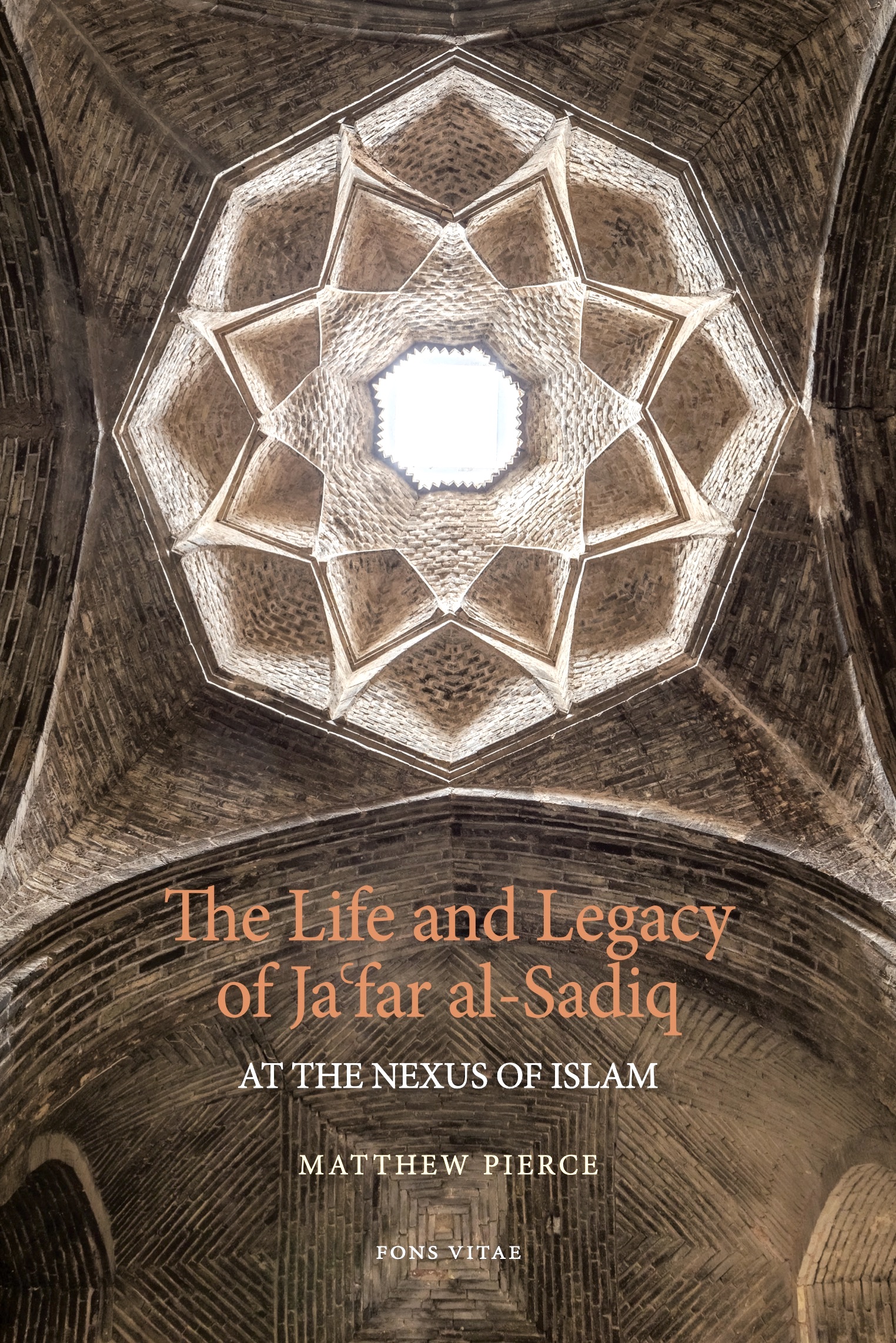
Product Description Matthew Pierce (PhD, Boston University) is Associate Professor of Religion at Centre College and Director of Centre Global. He is the author of Twelve Infallible Men: The Imams and the Making of Shiʿism (Harvard University Press, 2016), winner of Iran’s Book of the Year Award. Matthew Pierce has lived and studied in Egypt, Yemen, and Iran. He specialized in Islamic history, religion and sexuality, and sectarianism. Pierce has published his work in premier reference volumes, such as The Princeton Encyclopedia of Islamic Political Thought (2012) and the Encyclopedia of Islam (Brill), in edited book volumes such as Women, Leadership, and Mosques: Changes in Contemporary Islamic Authority (Brill, 2012), and in academic journals such as the Journal of Shi’a Islamic Studies. He has three chapters accepted for publication in the upcoming book, Islam in 5 Minutes (Equinox, 2026). Ja’far is a household name in Muslim traditions and a well-known as a figure in Islamic history. For Shi’a Muslim communities, any book about Ja’far al-Sadiq will be of immediate interest and highly desired. Very few works in English exist on their imams and many English-speaking Shi’a communities deeply crave more works like this. But this will also be a book that is of interest to introductory students to Islam and general readers on Islamic history. The complexity of Ja’far’s legacy and historical context is explained in non-specialist language and the book will be of interest to Muslims of all backgrounds. There are no accessible accounts of Jaʿfar’s life in English. A few academic articles exist and a dense, erudite study by Hossein Modarressi was recently published by Harvard University Press (Text and Interpretation: Imam Jaʿfar al-Ṣādiq and His Legacy in Islamic Law, 2022). But there are no volumes that make Jaʿfar’s complicated life and legacy readable for the general public and average Muslim in English. Ja’far al-Sadiq is highly revered in Shi’a Muslim circles. His life is particularly celebrated every year by Shi’a Muslims at the anniversary of his death (25th of Shawwal) which will be in mid-April in 2026. Excerpt from Chapter III: Searching the Inner Secrets. Selected quotes attributed to Jaʿfar al-Sadiq: “The collection of teachings attributed to Jaʿfar al-Sadiq in Lantern of the Path begins with this exhortation: The roots of conduct have four aspect: conduct with Allah (SWT), conduct with the self, conduct with creation (i.e. people), and conduct with this world. Each of these aspects is based upon seven principles, just as there are seven principles of conduct with Allah (SWT): giving Him His due, keeping His limits, being thankful for His gift, being content with His decree, being patient with His trials, glorifying His sanctity, and yearning for Him. The seven principles of conduct with the self are fear, striving, forgiveness, harm, spiritual discipline, seeking truthfulness and sincerity, withdrawing the self from what it loves, and binding it in poverty (faqr). The seven principles of conduct with creation are forbearance, forgiveness, humility, generosity, compassion, good counsel, justice and fairness. The seven principles of conduct with this world are being content with what is at hand, preferring what is available to what is not, abandoning the quest for the elusive, hating overabundance, choosing abstinence (zuhd), knowing the evils of this world and abandoning any desire for it, and negating its dominance. When all these qualities are found in one person, he is then one of Allah’s (SWT) elite, one of His close bondman and friends (awliya’). [Lantern, 3]” Reviews He who is submersed in the ocean of knowledge has no need for shallow waters; he who has ascended to the peak of truth has no fear of falling. Shahrastani in his description of Ja far al-Sadiq, Milal, 133 [Ja'far al-Sadiq] was the most renowned man of the highest rank revered more than any other within the larger community as well as among the elite. People passed on knowledge from him wherever they traveled until he was known throughout the lands. And religious scholars have cited his authority on matters more than anyone else from among the ahl al-bayt. Al-Shaykh al-Mufid, Irshad, II: 179
Islam